


Indie Sleaze Then and Now: From Underground Club Culture to Mainstream Trend
EDITORIAL
By Indi Tejeda
12/10/25
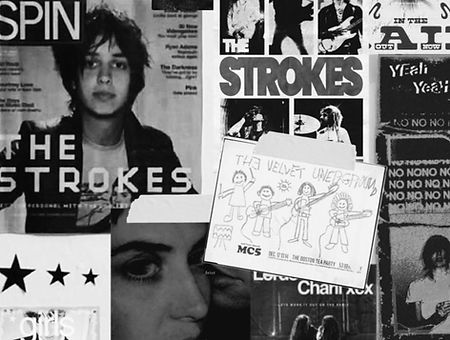
(Collage by Indi Tejeda)
By the time “indie sleaze” re‐entered the cultural lexicon in 2021, the movement it described had already been gone for nearly a decade. What began in the early 2000s as a sweaty, chaotic,
and semi-anarchic club scene, full of thrift‐store finds, disposable cameras, and post‐punk
energy, had quietly evolved into something bigger, more stylized, and less lived-in in its revival.
Think of early-internet “It girls,” grainy photos from warehouse parties, nights ending at sunrise. That raw, unfiltered energy defined the first wave. Today, “indie sleaze” has resurfaced on moodboards, TikToks, and even high‐fashion runways. But this revival is less a re-creation than a reinterpretation, a remix.
The Original: Underground, Messy, and Fragmented
In the mid‐2000s, indie sleaze wasn’t a hashtag, it was a diffuse, semi‐organic aesthetic
emerging from overlapping scenes in New York, London, LA, and Berlin. Bands like The
Strokes, Yeah Yeah Yeahs, or Interpol are often cited as reference points, but not every fan or clubgoer aligned with a monolithic “Indie Sleaze scene.” It was more a collection of
micro-scenes, DIY parties, and early internet subcultures than a formally recognized movement.
Fashion was thrifted, layered, and ragged: leather jackets over vintage tees, skinny jeans,
smudged eyeliner, unbrushed hair. Photography was flash-heavy, grainy, and spontaneous.
Disposable cameras and point-and-shoots captured nights that often ended in chaos. The
messiness was deliberate in its own way: a rebellion against polish, perfection, and mainstream expectations.
The aesthetic grew from lived experience. crowded basements, sweaty clubs, underground
shows, and risky nights. Its rawness was inseparable from its environment: DIY culture, limited budgets, and the thrill of being part of a fleeting, exclusive moment.
The Revival: Carefully Messy, Highly Curated
Fast forward to the 2020s. Indie sleaze is back, but mostly on screens, feeds, and runways. The revival began around 2021 when a dedicated Instagram account resurrected the style for a new generation.
But this time, the chaos is edited. The grit is stylized. Eyeliner is smudged on purpose. Leather jackets are deliberately draped over curated outfits. Vintage band tees, ripped tights, and layered accessories remain, but are polished with intention. What once felt lived-in now feels designed.
This revival isn’t just a copy of the past. It’s a reinterpretation. A remix. Modern indie sleaze blends the DNA of the original with contemporary sensibilities. social media awareness, digital curation, and fashion-conscious styling. As one 2025 write-up puts it, it’s “polished chaos, where intentional messiness meets structured style.”
Generational Remix: Mood Over Memory
Part of what makes this revival compelling is that it’s not being led by those who lived it. The original participants were often too immersed in music, nightlife, or DIY subcultures to think in terms of aesthetics or hashtags. Today, younger generations scroll through archives of blurry party photos, early MySpace snapshots, and grainy flash photography, turning lived moments into mood boards.
For them, indie sleaze is less about memory and more about feeling: aesthetic, reference,
nostalgia, and reinvention. They borrow the energy of the early 2000s, add modern styling and
social‐media sensibilities, and build something that nods to the past while fitting the present.
This remix gives indie sleaze renewed relevance. What was once rebellion was born from
constraints. Low budgets, underground clubs, DIY culture. Now becomes a conscious aesthetic
choice, often celebrated as freedom, imperfection, and authenticity in contrast to minimalist or “clean girl” trends.
Why It Matters, Then and Now
The comeback of indie sleaze illustrates how subcultures can be reborn not as faithful
reproductions, but as reinterpretations. In 2005–2012, indie sleaze lived: sweaty nights, risky clubs, small-venue shows, and spontaneous chaos. It wasn’t safe, uniform, or entirely
self-conscious.
In 2025, indie sleaze is both a style and a statement. It pushes back against years of curated
perfection, minimalism, and algorithmic feeds. It signals that grit, imperfection, and personality still matter.
Yet the revival also raises a question: can culture ever truly be revived, or only its aesthetic skeleton? Modern indie sleaze dresses like the old version, shares visual cues, and channels similar energy. But without smoky rooms, chaotic parties, and the DIY unpredictability of the original. It becomes nostalgia, curated chaos, and yes, another fashion trend.
Ultimately, the story of indie sleaze is less about replication and more about interpretation: how memory, mood, and aesthetics can converge to keep a cultural energy alive, even when its lived experience has passed.